15 Things To Do In Cluj-Napoca, Romania’s Most Liveable City


Are you looking for some fun things to do in Cluj-Napoca?
Cluj (as the locals call it) was the final stop on our two-week summer road trip around Romania. Based on our experience and what we discovered, here’s a comprehensive guide to things to do in Cluj-Napoca.
But first, is Cluj-Napoca worth visiting?
Cluj surprised us in the most pleasant way.
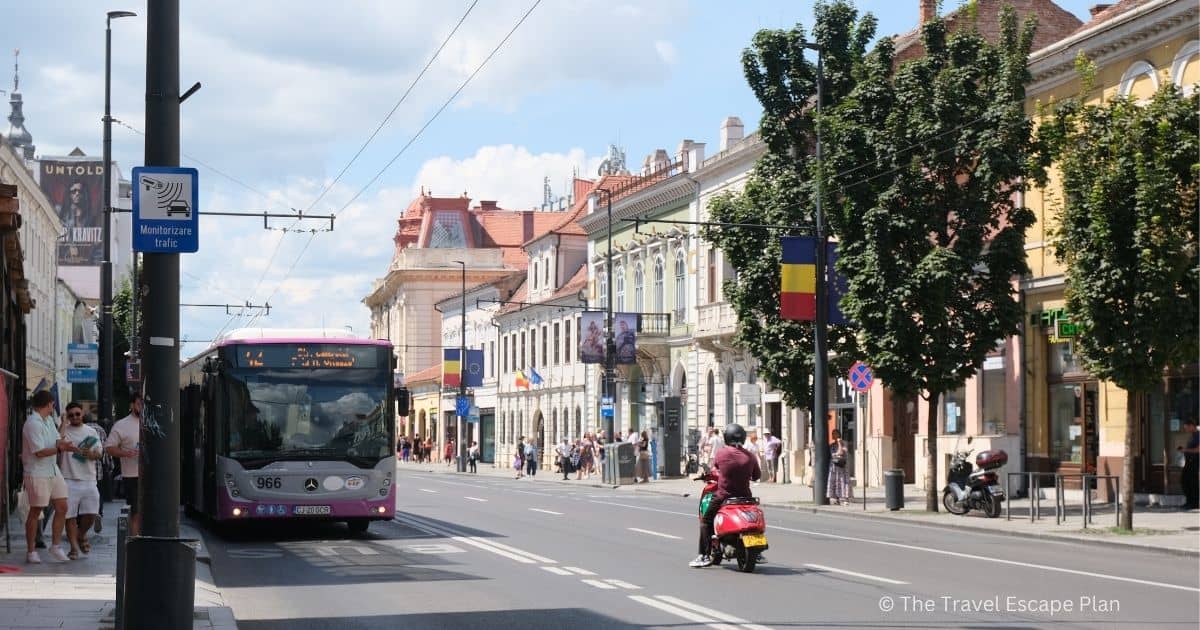
Romania’s third-largest city is charming but more modern than its Transylvanian sister cities, Brasov and Sibiu. Home to the country’s largest university, it has a youthful energy and understated hipster vibe.
After a few days of getting to know the city, we could really see ourselves living here. Don’t you think the best travel destinations are the ones that make you feel right at home?
Turns out we weren’t the only ones who felt this way.
In 2023, a Quality of Life in Europe Report ranked Cluj among the Top 10 “most liveable cities in Europe”.
So what makes Cluj such a liveable (and loveable) city?
Great coffee. Lively dining culture. Vibrant arts scene. Easy access to nature. Beautiful architecture. Convenient transport links. Affordable. Not crowded with tourists like other parts of Transylvania. Need I say more?
Let’s explore!
Top 3 Things to Do in Cluj-Napoca
If you only have a few days in Cluj-Napoca, I would head to Cluj Old Town. There are plenty of attractions within walking distance.
1. Eat & Drink in Cluj-Napoca Old Town
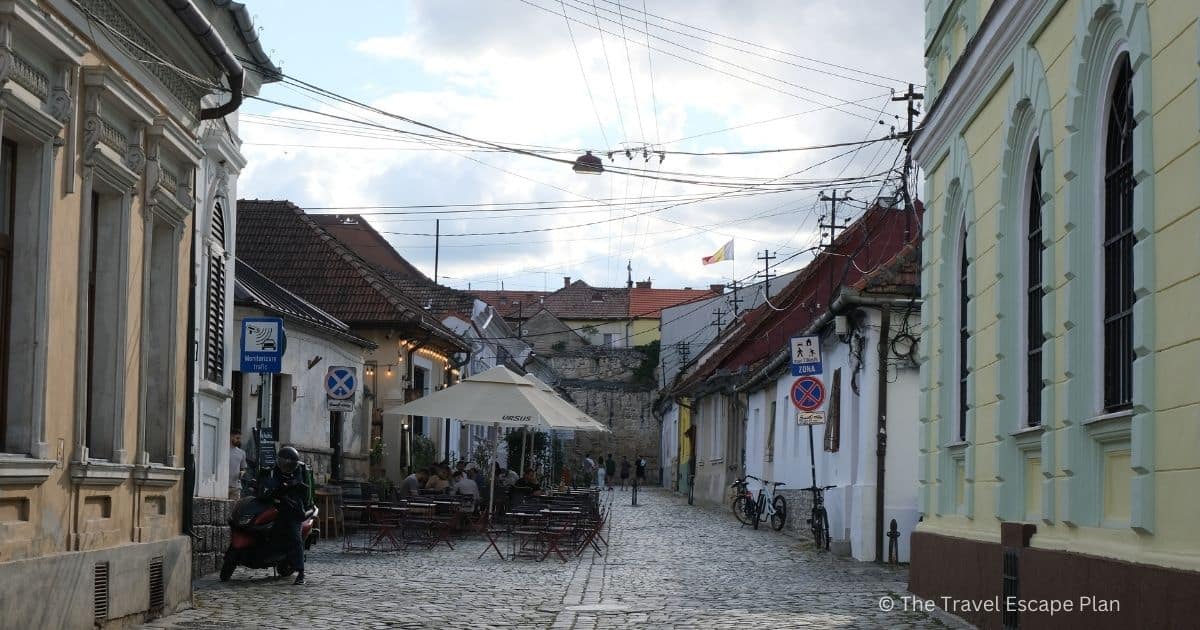
The great thing about Cluj-Napoca Old Town is that you don’t have to walk far to find a good place to eat or drink.
The coffee culture in Cluj is really good. The restaurant scene is diverse and caters to all tastes and budgets, and the city is buzzing with bars – after all, university students like to party!
Most tourists head to the restaurants in Piata Unirii, the main square. Here, you can dine with a nice view of the city’s most iconic landmarks – the Matthew Corvin statue and Saint Michael’s Church. Remember that you’ll also pay ‘tourist prices’, another way to say ‘it’s more expensive’.
Piata Muzeului and its side streets are also popular places to eat and drink, especially at night. The area is pedestrian-friendly and filled with outdoor dining terraces. At night, the streets are lit up by strings of hanging light bulbs, which creates a cosy atmosphere.
My favourite place to go is the area opposite the main square, sandwiched between Strada Napoca, Strada Universitatii, and the Old Fortress Wall on Strada Potaissa. This area has the best cafes for coffee and brunch away from the tourist crowd.
2. Enjoy the Panoramic View from Cetatuia Park
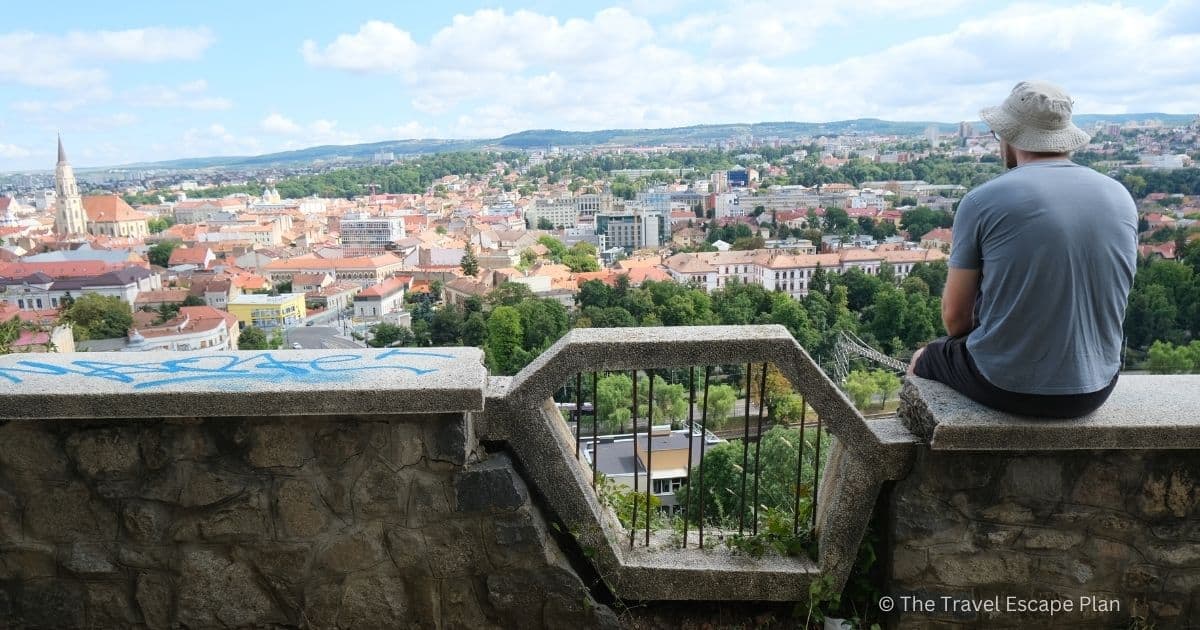
If you’ve read any of my other blog posts, you know I love a good viewpoint.
Cetatuia Park (Fortress Park) provides a lovely panorama of Cluj’s cityscape.
To get to the viewpoint, go to Strada General Dragalina (a 10-minute walk from Piata Unirii) and climb the stairs on Aleea Scarilor until you see the remnants of the old fortress wall from the Austrian Empire’s occupation in the 18th Century. It’s a short ascent and should only take about 10 minutes.
If you’re feeling peckish, you can continue along the fortress wall to Panoramic Restaurant or up Aleea Scarilor to the restaurant at Hotel Belvedere. Both offer fantastic city views but expect higher prices.
If you’re on a tight budget, do as we did and pack a picnic.
In Cetatuia Park, you’ll also notice a giant cross structure at the top: the Heroes of the Nation monument. It honours those who were once imprisoned in the fortress.
✌🏼 Alternative Option:
For those who like hiking, Feleac Hill has an even better city viewpoint. It is 825 metres above sea level and can be reached in two hours by foot from the Old Town Centre.
3. Immerse Yourself in Cluj’s Thriving Art Scene
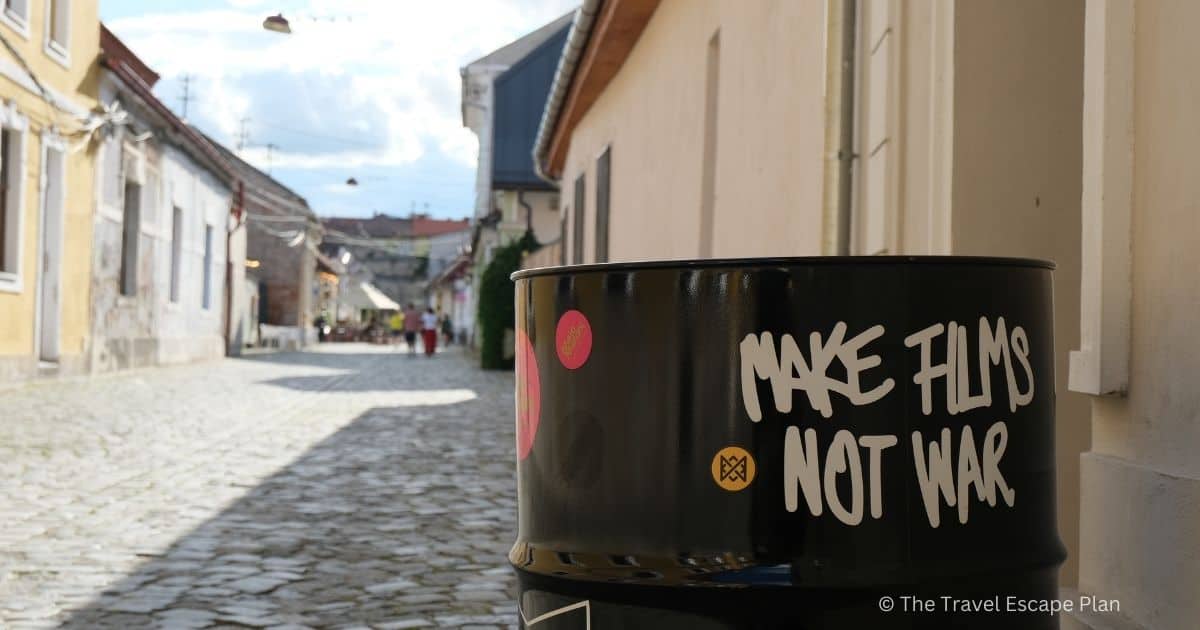
Cluj-Napoca has a creative spirit, so you’ll find many art galleries here.
- For a unique immersive experience that combines fantasy with innovation, visit the highly rated Steampunk Transylvania. The artists create interesting machines using recycled materials. You gotta see it to believe it.
Located on Strada Stefan Octavian in Cluj Old Town. Open Monday to Saturday from 12:00 pm to 8:00 pm and Sundays from 11:00 am to 7:00 pm. Admission costs 60 RON.
⚡️ TIP: After your visit, you can continue the steampunk theme at Enigma on Strada Iuliu Maniu – the world’s first kinetic steampunk restaurant. It’s only a 5-minute walk from the museum.
- To see the evolution of Transylvanian art over the last 500 years, visit the National Art Gallery. It also has temporary exhibitions showcasing modern art by independent artists in Europe.
Located at Piata Unirii. Open Wednesday to Sunday from 10:00 am to 5:00 pm. Admission starts from 12 RON.
- For contemporary art, check if there are any exhibitions running at the Centre of Interests (Centrul de Interes).
Located on Strada Fabricii de Chibrituri next to the Cluj-Napoca train station – about a 30-minute walk north of Old Town. Open Tuesday to Saturday from 3:00 pm – 7:00 pm.
- If you’re a fan of street art, you can book a guided tour with ArtCrawl Cluj.
Tours go for 2.5 hours and cost 30 euros per person.
Free Things To Do in Cluj-Napoca
Cluj-Napoca is a budget-friendly place to visit. In addition to cheap public transport, there are several things that you can do for free in the city.
4. Go on a Free Walking Tour with a Local Guide
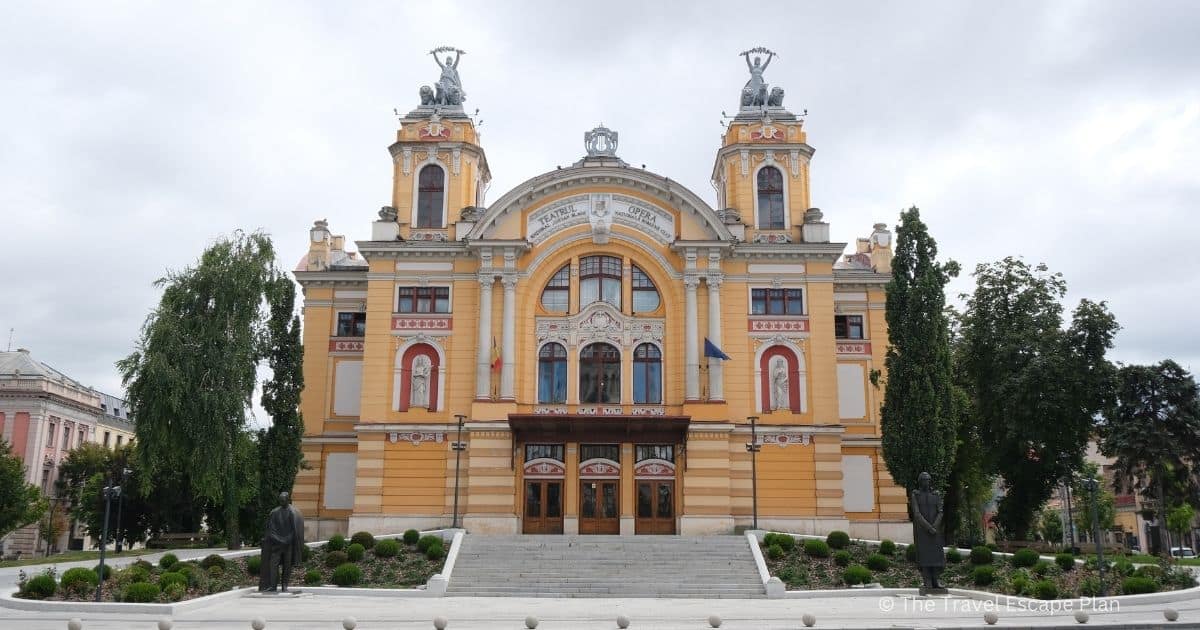
Almost every city I’ve been to offers a free walking tour. It’s a great way to get to know a destination from a local’s perspective and meet other travellers!
We recommend this Free Walking Tour by Cluj Guided Tours.
We learnt a lot about the city’s history. Our guide showed us some beautiful architecture, such as the National Opera and Cathedral of the Dormition of the Theotokos Orthodox Cathedral, which we wouldn’t have otherwise gone out of our way to see.
Tours operate at 11:00 am and 6:00 pm daily. Reservations must be made 24 hours in advance.
Note: Free walking tours are generally tips-based. I try to tip at least the equivalent of 10 euros per person, but it’s really up to your satisfaction with the tour and budget!
5. Visit the Medieval City Walls & Towers
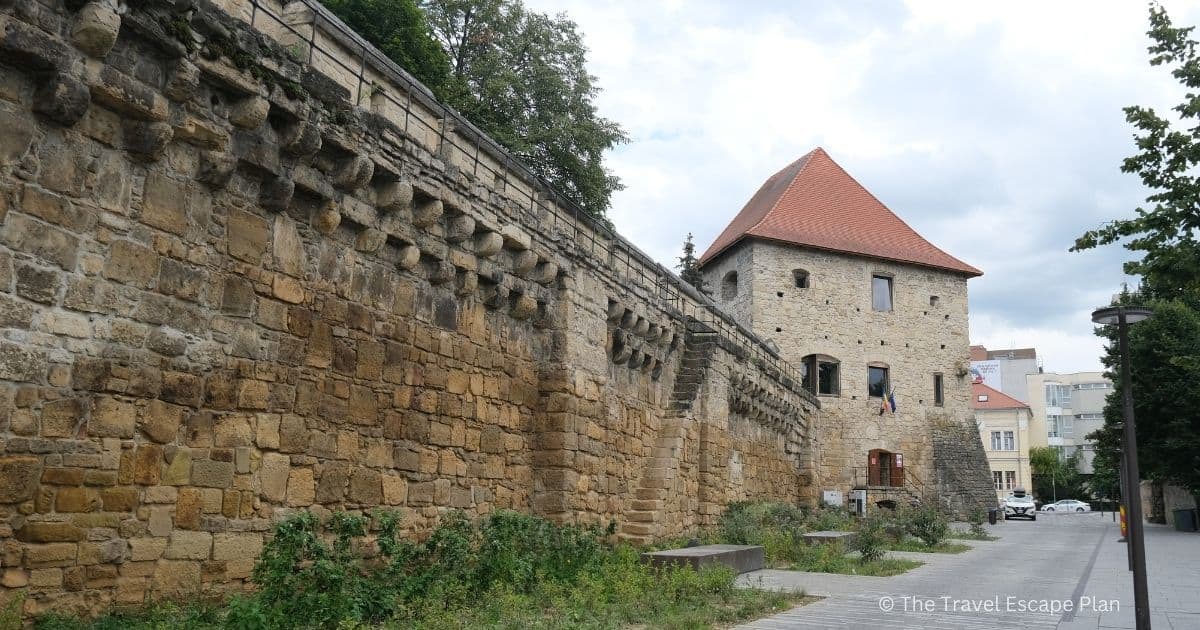
The medieval wall in Cluj isn’t as well-preserved as the ones you see in other parts of Transylvania.
The only fragment of the historic wall that remains is along Strada Potaissa.
The Tailor’s Bastion (Turnil Croitorilor) and Firefighters’ Tower (Turnul Pompierilor) are the only original defence towers still standing.
Both towers have been converted into culture centres with art exhibitions and viewing platforms with 360-degree views overlooking the city. Best of all, they’re free to visit 😊
The Tailor’s Bastion is on Strada Baba Novac, on the same side of the Old Town as the medieval wall, about a 10-minute walk from Piata Unirii. Open Monday to Friday from 10:00 am to 8:00 pm. On weekends, opening hours are from 11:00 am to 7:00 pm.
The Firefighters’ Tower is on Strada Tipografiei, about a 5-minute walk from Piata Unirii – same opening hours at the Tailor’s Bastion.
6. Climb to the Top of St Michael’s Church Tower
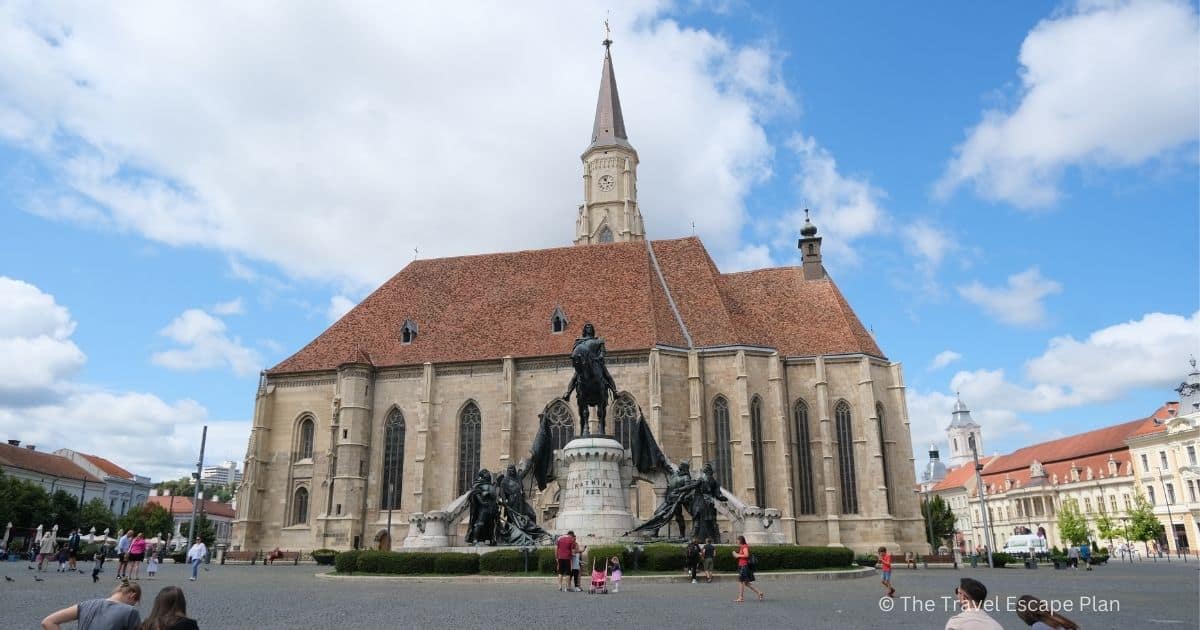
Another free viewpoint in the centre of Old Town is St Michael’s Church in Piata Unirii.
The church is an example of medieval Gothic architecture. Its construction began in 1316 and took 171 years to complete!
Its bell tower is 80 metres long, making it the tallest church tower in Transylvania. You can climb to the top for a lovely view of the city, but honestly, I think the view looks better with the church in it!
The church and bell tower are open to visitors on Wednesday and Saturday from 10:00 am to 5:30 pm and Sunday from 12:30 pm to 5:30 pm. They are closed during the Winter months.
7. Relax in an Urban Park
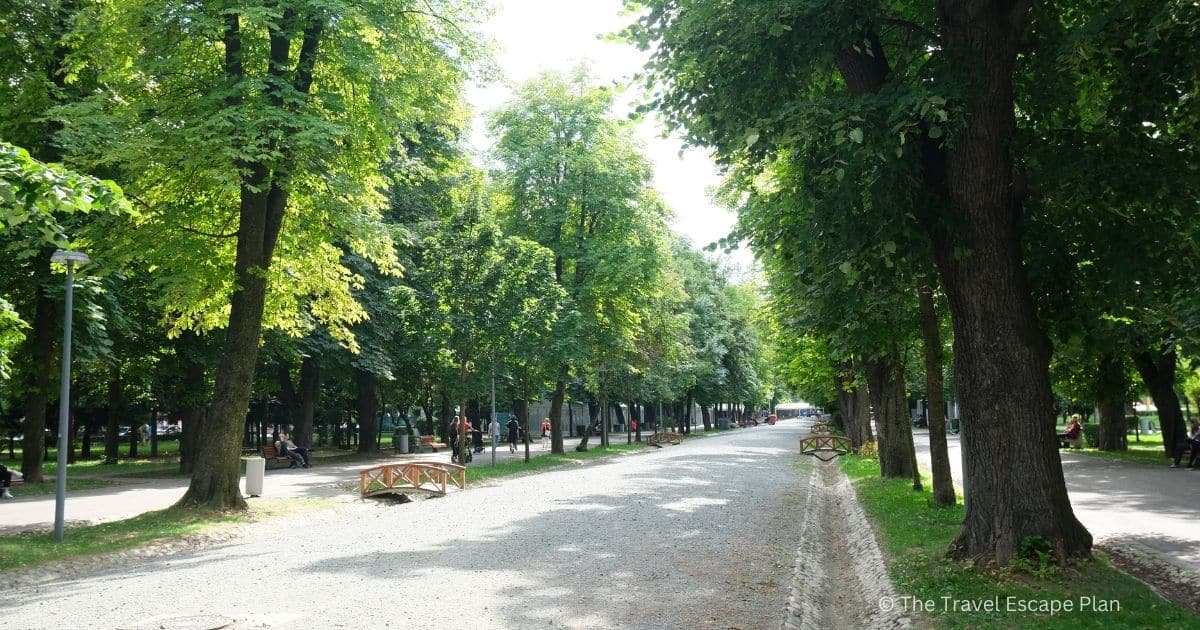
In addition to Cetatuia Park, there are several green spaces in the city where the locals go to relax and enjoy some fresh air.
The closest park to the Old Town Centre is Simion Barnutiu Central Park. Inside, there’s an old Casino that’s been transformed into a cultural space with free art exhibitions. You can also rent boats on the artificial Chios Lake or enjoy waterfront dining at Chios Social Lounge or Carrousel.
A little bit further away from the Old Town (about a 40-minute walk), you’ll find Grigorescu Park, which has a city beach! The sand isn’t up to Australian beach standards, but there’s lots of shade, and you can dip your toes in the Somesul Mic River.
More Things To Do in Cluj-Napoca
8. Learn About Romanian History at a Museum
There are a couple of places in Cluj where you can learn about Romania’s rich history and cultural heritage.
- You can visit the National Museum of Transylvanian History in the Old Town Centre. It displays artefacts from different historical periods, including the Dacian era – the ancient civilisation of Transylvania.
Open Tuesday to Sunday from 10:00 am to 6:00 pm. Admission cost 20 RON.
- If you haven’t already visited the open-air village museums in Bucharest or Sibiu, then visit Romulus Vuia Ethnographic Park. It’s home to historical buildings belonging to rural Romanian villages from the 17th to 20th Centuries, including three original wooden churches. It’s like stepping back in time! You can even go inside some buildings to learn about age-old crafts like woodworking, blacksmithing and wool weaving.
Located in the Hoia Baciu Forest, about a 45-minute walk from Cluj Old Town. Open Wednesday to Sunday from 10:00 am to 6:00 pm during Summer and from 9:00 am to 4:00 pm in Winter.
9. Treasure Hunt at Oser Flea Market
I love flea markets, especially European ones – you never know what you’ll find!
Not only is it a sustainable way to shop, but someone’s preloved treasures make great one-of-a-kind souvenirs or gifts. I get loads of compliments on the vintage jewellery or clothing pieces I’ve collected on my travels over the years 😊
Even if you don’t have much space in your luggage, it’s a great place to meet the locals and try some traditional Romanian mici sausages.
Oser Market is in Cluj’s northern suburb of Bulgaria.
Open Wednesdays from 8:00 am to 1:00 pm and Saturdays from 7:00 am to 12:00 pm. Admission is 1 RON.
Things To Do in Cluj-Napoca for Outdoor Lovers
Cluj-Napoca is a nature lover’s paradise. In addition to the many urban green spaces, there are forests, lakes and gorges within an hour’s drive from the city.
10. Explore a Haunted Forest (If You Dare)
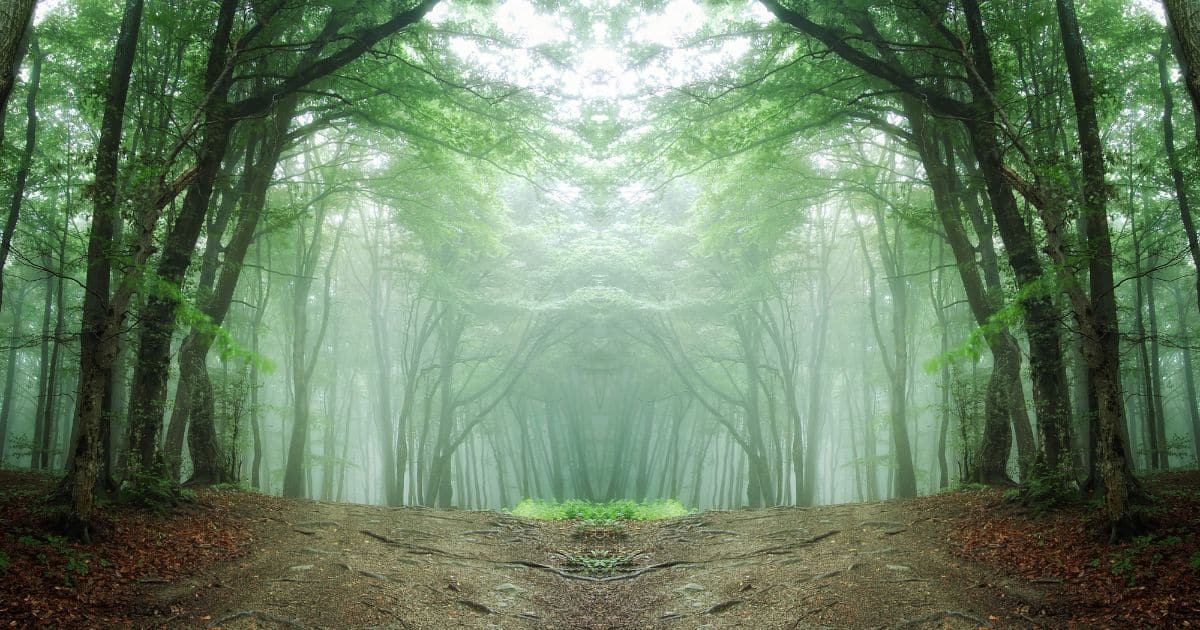
Hoia Baciu Forest, sometimes called the “Bermuda Triangle of Transylvania”, is one of the world’s creepiest forests.
It rose to international fame during the 1960s when someone captured a photo of what looks like a UFO flying over a clearing in the forest.
There have been numerous reports of disappearances and other paranormal activity, such as ghost sightings and unexplained physical symptoms from visitors. Legend has it that the forest is named after a shepherd who went missing with his flock of 200 sheep in the forest 😬
Despite the haunted stories, the Hoia Baciu forest is still a beautiful place to walk in nature. If you prefer to cycle, there’s a ClujBike public bike rental station on Strada Taietura Turcului.
Feeling apprehensive about going on your own? Luckily, you can book a guided tour through the forest during the day … or night (insert x-files theme song here 👽).
👉🏼 Check out this Night Tour in Hoia Baciu Forest.
11. Go Kayaking in a Lake
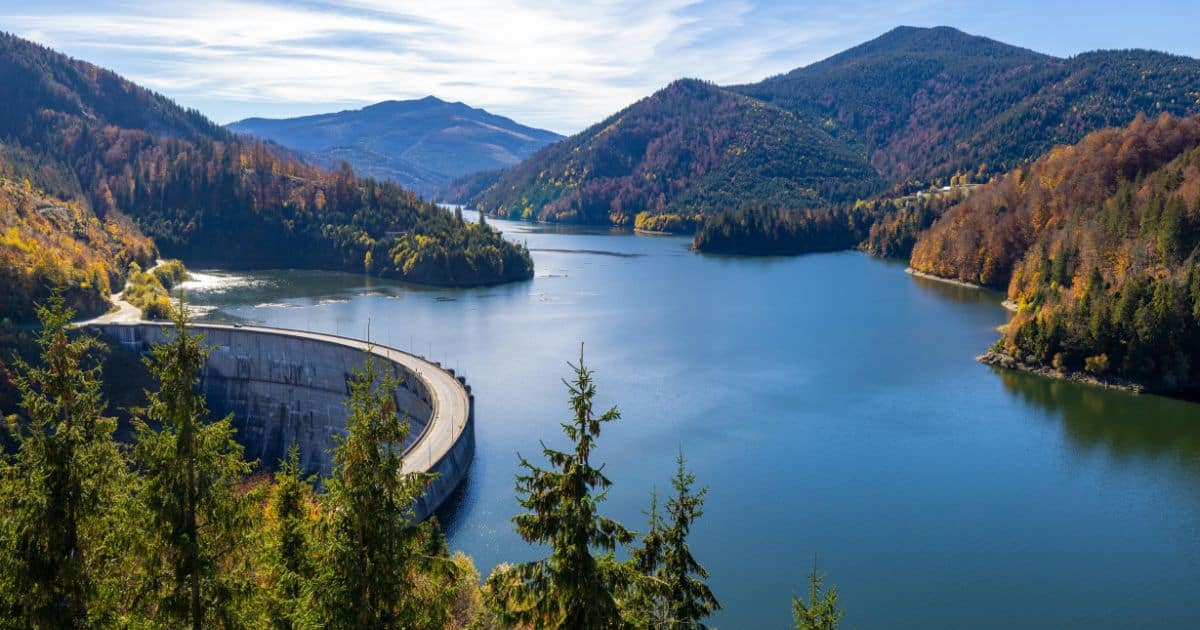
Lake Tarnita is the city’s primary water source. It’s also a serene spot for picnicking, hiking, fishing, and water sports.
There are several places where you can rent boats, kayaks and hydro bikes. I recommend Village by the Lake because they also serve food and drink and have a deck with sun lounges.
The 10 km loop from Tarnita Dam to Lucaci’s Rock is a popular hiking trail. It takes about 4 hours to complete. Part of the hike is quite steep, so it’s not beginner-friendly, but the views from the top are worth it.
How to get from Cluj-Napoca to Lake Tarnita:
🚘. The most convenient way to get from Cluj-Napoca to Lake Tarnita is by car – the drive only takes 30 minutes.
🚍 The cheapest way is to catch Bus No. 51 from the Bacium transit stop just outside Cluj city centre to Gilau, followed by a short taxi ride to your desired location around the lake.
12. Go Hiking in a Gorge
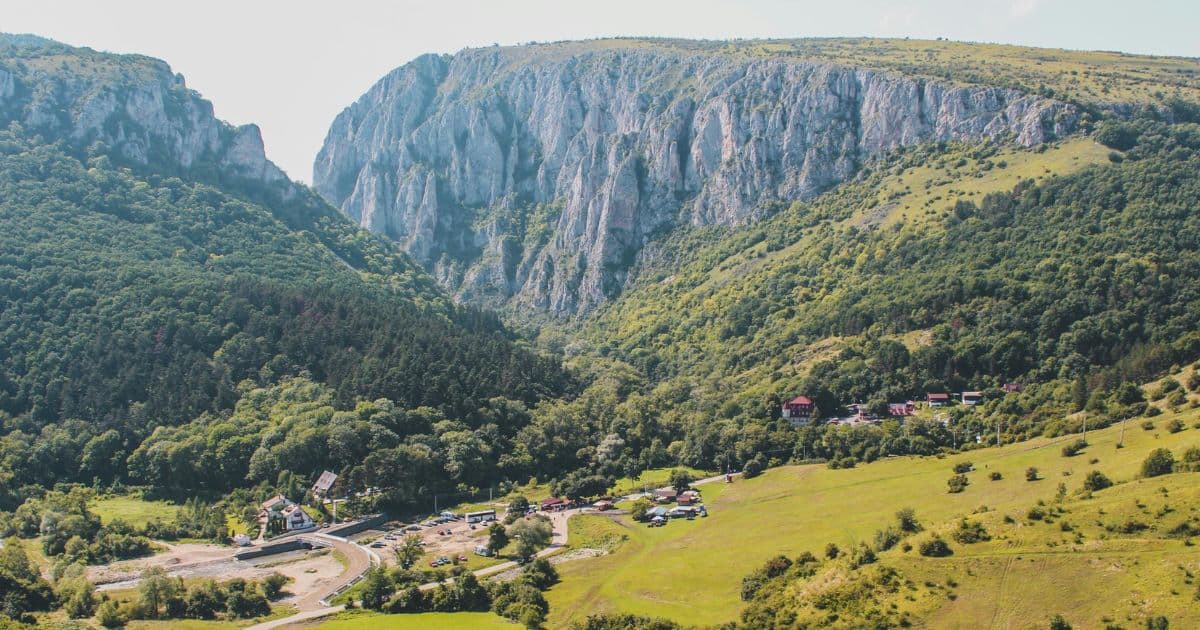
Cluj-Napoca is surrounded by a dramatic landscape of steep gorges carved into Jurassic limestone rock by river flow over millions of years.
The most popular gorge near the city is the Turda Gorge (Cheile Turzii Gorge).
The gorge is 3 kilometres long and nestled between 350-metre high cliffs.
There are several well-marked hiking trails in the area. The easiest one is the Red Dot Trail, which follows the Hasdate River through the flat valley of the gorge. It takes about 1.5 hours to complete one way.
Note: If you visit during peak season (May to September), you may have to pay a visitor’s tax of 6 RON.
How to get from Cluj-Napoca to Turda Gorge:
🚘 The easiest way to the gorge from Cluj is by car. You can start the hike either at Petrestii de Jos (the end closer to Cluj, 35-minutes drive) or Cheia (50-minutes drive). Parking at both sites costs 10 RON. Otherwise, a taxi costs between 140-170 RON.
🚍 The cheapest option is to catch the Fany bus from the bus stop in front of the Accapulco restaurant on Piata Mihai Viteazu in Cluj Old Town and get off at Autogara Sens Vest bus station in Turda. Here’s the Cluj-Turda bus schedule. Bus tickets cost 14 RON. The journey takes about an hour. From Turda, you’ll then need to catch a 10-minute taxi to Cheia to access the gorge.
👉🏼 Feeling adventurous? Check out this Private Hiking or Climbing Experience in the Turda Gorge.
Day Trips from Cluj-Napoca
Usually, when people think of travelling to Transylvania, they add Bran Castle or Sighisoara to their itinerary. But there are some pretty impressive, lesser-known places that you can reach from Cluj-Napoca in less than an hour and a half.
13. Turda Salt Mine

The Turda Salt Mine (Salina Turda), located 35 km south of Cluj-Napoca, was formed by excavating salt deposits left behind from an ancient sea that evaporated more than 10 million years ago. The mining began around 200 AD and continued until the 1930s, when it was eventually abandoned.
In 1992, the mine reopened as a mini-amusement park with a Ferris wheel, amphitheatre and underground lake complete with boat rides!
There’s also a dedicated halotherapy (salt therapy) area. Many people believe that salty air offers natural anti-inflammatory and anti-bacterial benefits.
How to get from Cluj-Napoca to the Turda Salt Mine:
🚘 Driving is the most convenient way to get from Cluj-Napoca to the Turda Salt Mine. The journey takes about 40 minutes, and there’s plenty of parking.
🚍 When taking public transport, you need to take the Fany bus from Cluj-Napoca to Turda first. Then, from the Turda town centre, you can either catch the local bus line 17, take a short taxi ride, or walk there in an hour.
👉🏼 Check out this Half-Day Guided Tour to the Turda Salt Mine.
14. Rimetea Village
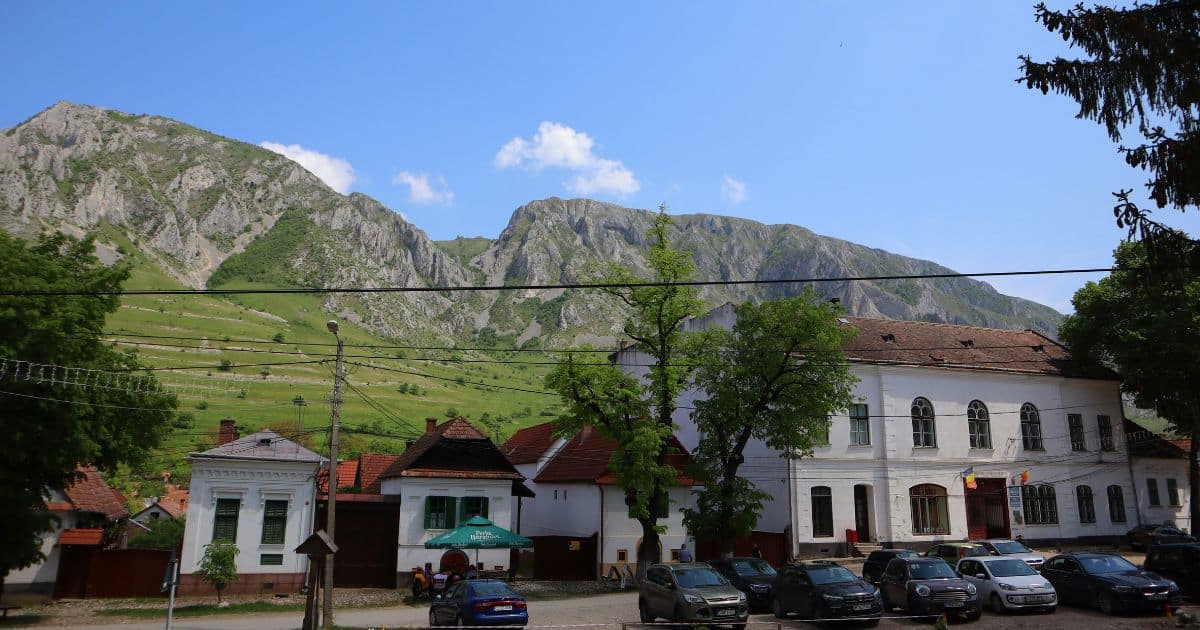
Rimetea is a charming rural village about an hour’s drive from Cluj-Napoca.
What makes Rimitea special is its unique 18th-century architecture – half the houses are made of white stone walls, green wooden shutters, and red clay tile roofs, all lined up in neat rows as if they were carbon copies of one another.
The village’s conservation efforts to preserve these houses won them a European Heritage Award in 1999.
Another reason the village is worth visiting is its picturesque location at the foot of Piatra Secuiului, a gigantic rock formation in the Trascau Mountains. At sunrise, the sun emerges from behind the rock, creating the illusion of two separate sunrises.
You can hike to the top of Piatra Secuiului for breathtaking panoramic views of the Transylvanian countryside. It’s quite a steep climb, so not for the faint-hearted, but the views are worth it.
How to get from Cluj-Napoca to Rimetea:
Rimetea is only a half-hour drive from Turda. You can combine a visit to the Turda Salt Mine, Turda Gorge, and Rimetea in one day.
👉🏼 Check out this highly rated Turda Salt Mine, Turda Gorge and Rimetea Full-Day Tour.
15. Alba Iulia
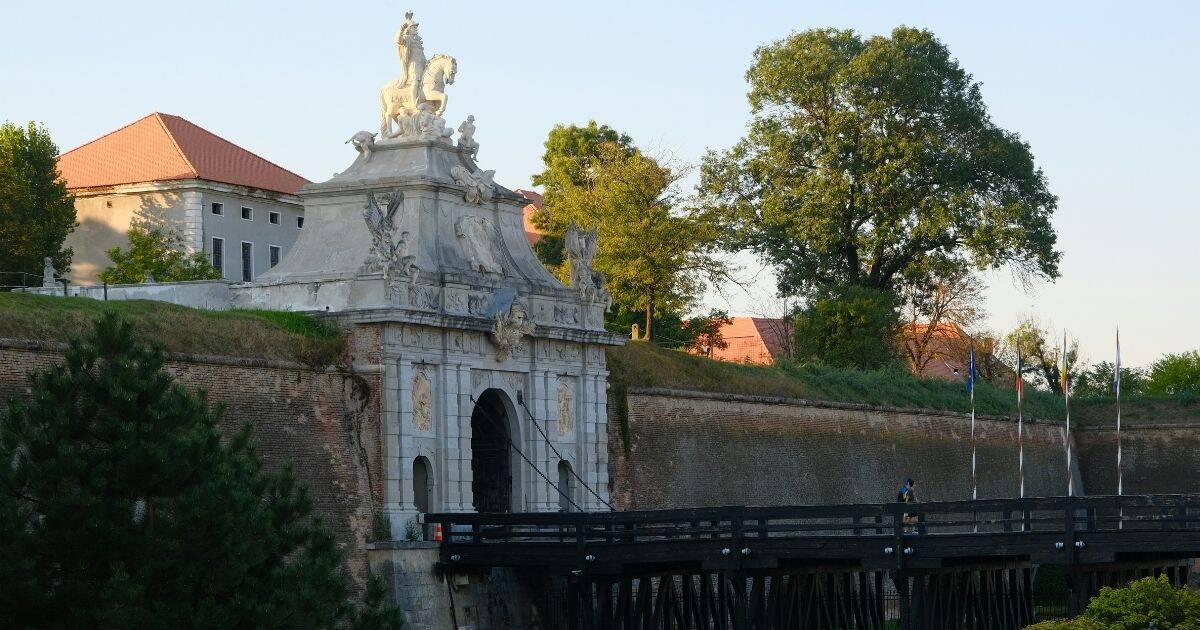
Alba Iulia is famous for the Alba Carolina Citadel, a star-shaped fortress with seven bastions built by the Austrian Empire in the 1700s.
Inside the fortress, there are many attractions, including the Union Hall, where the Transylvanian region officially became part of Romania during the Great Union of 1918.
Every day between May and September, at 12:00 pm (and also at 9:00 pm on Friday and Saturday), you can watch a reenactment of the Changing of the Guards in front of the Third Gate.
There’s a 2.6 km ditch around the citadel walls lined with restaurants, cafes, and outdoor terraces. It’s a nice place for a stroll, but you can also rent bikes and e-scooters or catch a minibus.
How to get from Cluj-Napoca to Alba Iulia:
🚘 The fastest way to travel from Cluj-Napoca to Alba Iulia is by car. The journey takes about an hour and a half.
🚍 Regular direct buses and trains connect the two cities, but these options add an extra hour to your journey.
👉🏼 Check out this Private Day Trip to Alba Carolina Fortress and Turda Salt Mine.
Visiting Cluj-Napoca: FAQs
How do you get to Cluj-Napoca?
✈️ Cluj-Napoca is easy to reach by plane. Cluj Avram Iancu International Airport (CLJ) is only 10 km from the city centre, and there are flight connections to many countries in Europe. We use Skyscanner to check for the best flights.
🚍 For local bus connections within Romania, check the Autogari website. For international bus connections to Cluj-Napoca from Europe, we recommend Flixbus.
🚊 Cluj’s Main Train Station is a 10-minute drive from the Old Town centre. Check the CFR Calatori website for local train connections. For international train connections, we recommend searching for tickets on Rome2Rio or Trainline.
⚡️ TIP: If you’re travelling through Europe for a month or longer and know you’ll be catching a lot of trains, it might be cheaper to purchase a Eurail Pass.
When is the best time to visit Cluj-Napoca?
There are plenty of things to do in Cluj-Napoca to keep you busy all year round.
Summer (June-August) is the most lively time of the year because of all the events that are happening in the city:
- Transylvania International Film Festival (May/June)
- Electric Castle Electronica Festival (July)
- Untold Electronica Festival (July/August)
- Jazz in the Park (June)
- Form Days in nearby Gilau (July)
Summer also provides the ideal weather to enjoy the lakes and gorges in the area.
Visit during Spring (March-May) and Autumn (September-November) for milder weather and fewer crowds. But honestly, Cluj doesn’t get nearly as many tourists as Sighișoara, Sibiu, or Brasov.
During Winter (December-February), the main square is lit up by the Christmas Market, and you can do snow sports at the nearby Baisoara Ski Resort.
How many days do you need in Cluj-Napoca?
Cluj-Napoca makes the perfect 3-day weekend getaway.
If you plan to go on day trips or do outdoor activities, extend your stay to 5-7 days.
How to get around Cluj-Napoca?
If you stay in Cluj Old Town, you can get everywhere by walking.
We stayed in the western suburb of Gheorgheni, which is slightly further away. However, we found it super easy and cheap to catch a bus or tram into town. It only cost us 3 RON per ride, and we could use contactless to pay.
🚍 You can check the timetable for local buses and trams here.
🚲 ClujBike is the local public bike-sharing system. There are bike stations all over the city centre. You must register an account before you can use one.
🚖 For short distances, we found Uber & Bolt reliable and cheap in Romania compared to the UK.
🚘 If you plan to do any day trips, I highly recommend hiring a car. You can hire one from Cluj Airport. Book one online in advance using Discover Cars.
Final Thoughts: Things to Do in Cluj-Napoca
So, this rounds up our 15 fun things to do in Cluj-Napoca.
As you can see, whether you’re there for the food, history, art or nature, Cluj has something for everyone!
It’s a great place to visit if you want to steer clear of the crowds that flock to the travel hotspots in Transylvania.
It’s not as charming as Sighisoara, Brasov or Sibiu, but it’s definitely way cooler 😎
Plus, the coffee here really is that good.
Check out my other Romania Travel Guides 😊
- 10 Things To Do In Sibiu, Romania’s Capital Of Culture
- 19 Things To Do In Brasov, My Favourite City In Romania
- 12 Things To Do In Sighisoara, Romania’s Real-Life Fairytale
- 15 Things To Do In Bucharest, Romania’s Underrated Capital
- 5 Easy Day Trips From Bucharest: Places To Visit (< 1 Hour)
- Transfagarasan Highway: Everything You Need To Know